What makes SCADA work on an industrial site
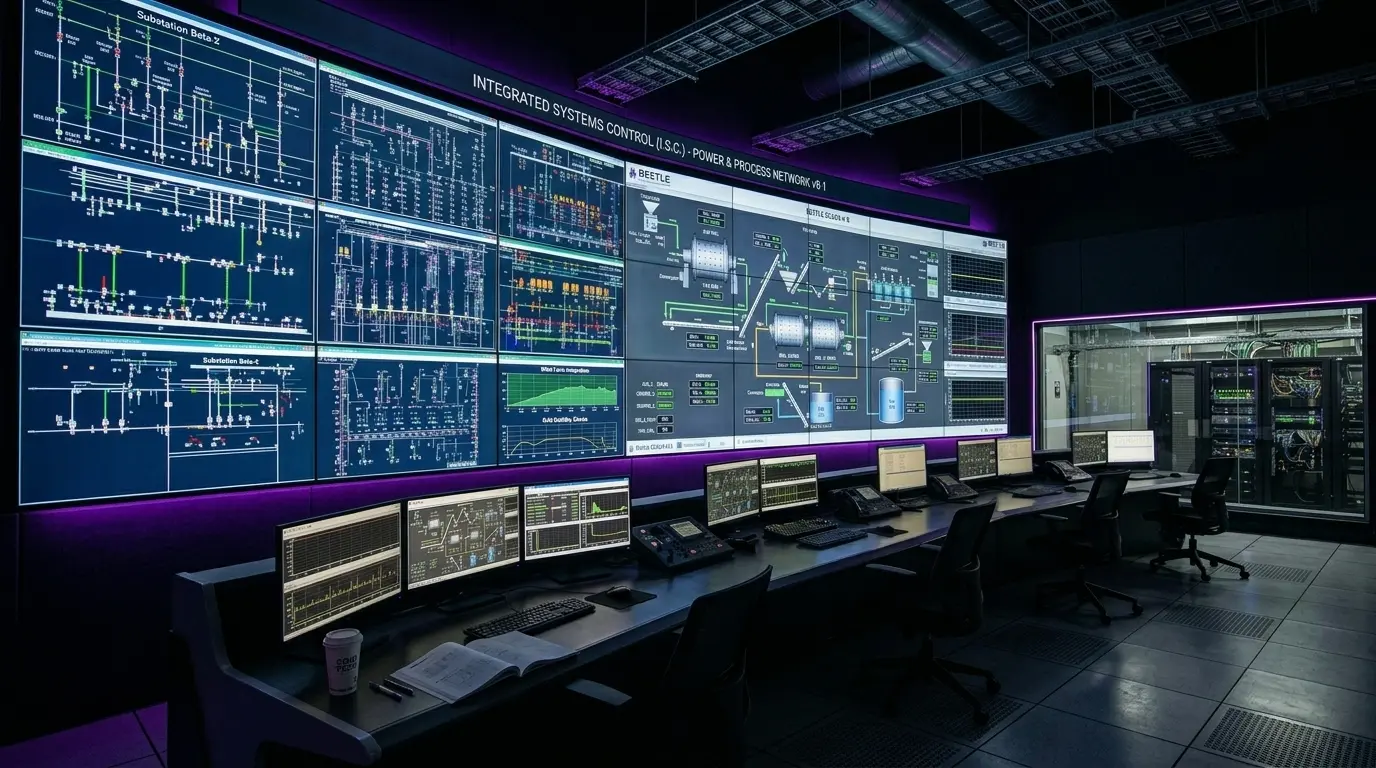
A SCADA system is only useful if operators trust it. That means the data is accurate, the screens show what matters, the alarms mean something, and the historian actually records what you need when something goes wrong.
We build SCADA systems for the people who use them - operators who need clear information quickly, and engineers who need reliable data for troubleshooting and reporting. We spend time on alarm management, screen design and historian configuration because these are the things that determine whether a SCADA system gets used or gets worked around.
What we deliver
New SCADA builds - full project scope from requirements through to commissioning. Tag database design, screen development, alarm configuration, historian setup, security, and operator training. We work on AVEVA System Platform, AVEVA InTouch, and Ignition for new projects.
SCADA upgrades and migrations - moving from legacy platforms, upgrading to current versions, or extending an existing system to cover new plant areas. We manage the migration carefully to minimise disruption to operations running on the existing system.
System integration - connecting SCADA to PLCs, instruments, drives, and third-party systems via OPC-UA, OPC-DA, Modbus TCP, EtherNet/IP, DNP3 and other protocols. Includes data quality checking and redundancy configuration where required.
Alarm rationalisation - reviewing and restructuring existing alarm databases to reduce nuisance alarms, improve alarm priority distributions, and bring the system into line with EEMUA 191 or your site standard. Alarm floods during upsets are a common problem on older SCADA systems and are fixable with structured rationalisation work.
Historian and reporting - SCADA historian configuration, process data archiving, and production reporting. If your business needs reliable production data and trend analysis, the historian configuration needs to be right from the start.
Remote access and monitoring - secure remote access to SCADA data for engineering and management, using VPN and appropriate OT security controls. We configure remote access properly - not as an afterthought.
Platforms we work with
AVEVA System Platform and InTouch are our primary platforms for large-scale or multi-site SCADA deployments. Ignition from Inductive Automation suits projects where licensing flexibility, web-based clients, or cloud connectivity are priorities. We also maintain and extend existing systems on Rockwell FactoryTalk, Citect, and GE iFIX - platforms where replacement isn’t justified just because they’re older.
SCADA virtualisation and server architecture
Many industrial sites run SCADA and historian systems on ageing physical servers - often legacy Windows installations that have not been updated because the SCADA vendor has not validated newer OS versions. When physical hardware fails, recovery can take days or weeks if compatible replacement hardware is unavailable or original software media and licence keys have been lost.
We scope and implement migration from hardware-based SCADA to virtualised server stacks running on VMware vSphere, providing hardware independence, snapshot-based backup, and easier disaster recovery without requiring a full SCADA platform replacement. Virtualisation also enables Primary/Backup server redundancy architectures that are impractical on dedicated physical hardware, and supports ThinManager thin client deployment - where lightweight terminal hardware connects to a centralised SCADA session rather than running full SCADA clients locally.
QCoal Cook CHPP - SCADA server virtualisation scoping and implementation for the Cook Coal Handling and Preparation Plant, migrating CitectSCADA from physical hardware to a virtualised environment as part of the PlantSCADA upgrade project.
QGC NW/CW Water Treatment Plants - virtualised SCADA server architecture for Queensland Gas Company water treatment facilities, supporting Primary/Backup server redundancy and remote access via ThinManager thin clients across geographically separated sites.
MSF Tableland Sugar Mill - FactoryTalk View SE virtualisation scoping, assessing migration from legacy physical servers to VMware vSphere and documenting the virtualisation approach for the mill’s Rockwell SCADA infrastructure ahead of a planned upgrade.
Commissioning approach
We do not commission SCADA systems by handing over a laptop and a manual. Our commissioning process includes loop checking of communications, alarm walkthrough with operations, historian verification, and a structured handover session where operators work through the system with us present. Punch lists get closed before we leave site.