Network infrastructure for operational technology
Control systems depend on networks. A PLC communicating with remote I/O over EtherNet/IP, a SCADA server polling field devices, a historian collecting data from multiple PLCs - all of it relies on the network infrastructure beneath it working correctly, every time.
Industrial networks are not the same as office networks. The hardware operates in harsher environments, the traffic has real-time requirements, the consequences of outages are measured in lost production rather than user inconvenience, and the security considerations are different because the systems being protected control physical processes.
We design and build industrial networks for the OT environment - the plant floor, the control room, the substation, and the connections between them.
What we design and build
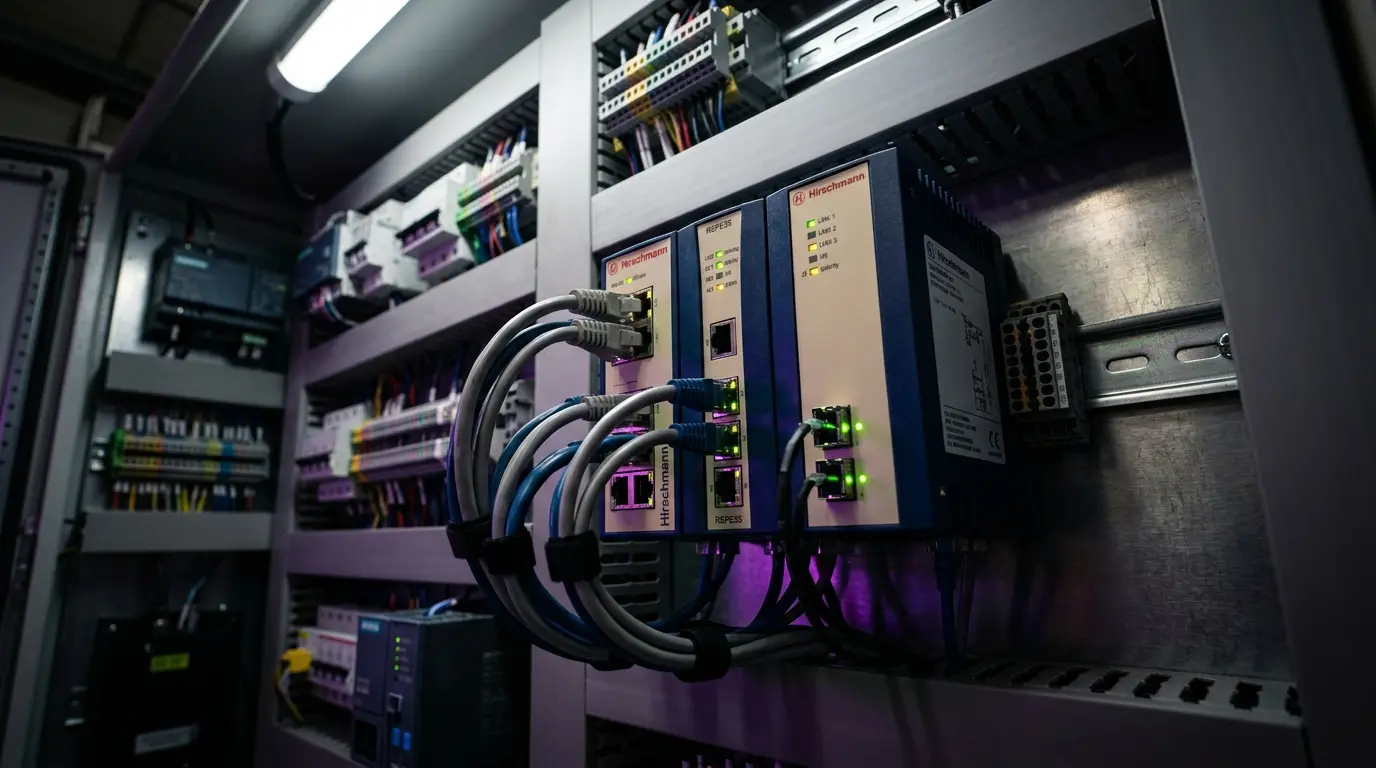
Managed switch network design - structured industrial Ethernet networks using managed switches appropriate for the environment. VLAN configuration for traffic segmentation, ring topologies for redundancy, and QoS settings to prioritise control traffic. We work with Cisco IE, Hirschmann, Moxa, Rockwell Stratix and other industrial-grade switch platforms.
OT/IT network segmentation - designing and implementing the boundary between your operational technology and corporate IT networks. Firewall configuration, DMZ design for data sharing, and documentation of approved traffic flows across the boundary. Done properly, segmentation improves security without preventing the data flows that business systems need.
Network documentation - accurate network topology diagrams, switch configuration records, VLAN registers, and IP address management documentation. Many industrial sites have networks that have grown without documentation - we survey and document existing infrastructure as the starting point for improvement work.
Remote access - secure remote access to OT systems for engineering and support use. VPN configuration, jump server design, and access control that limits what remote users can reach. Remote access is a significant attack surface if not designed carefully - we configure it with appropriate controls and logging.
Industrial wireless - plant-floor wireless networks for mobile operator terminals, asset tracking, and field device connectivity. Point-to-point and point-to-multipoint radio links for remote field sites and long-distance connectivity across mining leases.
Network redundancy - ring topologies and redundant uplinks for network paths where a single cable failure should not cause a control system outage. RSTP and MRP configuration for fast failover. Particularly important for conveyor systems and processing lines where network interruption maps directly to production loss.
Network monitoring - configuring network monitoring and alerting so that infrastructure problems are visible before they cause control system issues. SNMP monitoring, syslog collection, and alerting thresholds configured for the OT environment.
OT network assessments
Many facilities have OT networks that were built incrementally as systems were added, without a coherent overall design. The result is often undocumented, has security gaps, and has single points of failure that aren’t obvious until something stops working.
We carry out structured OT network assessments covering physical topology, switch configuration, segmentation, remote access points, and documentation. The output is a practical report - what exists, where the gaps are, and what to address first. We prioritise by risk and impact so that improvement work is targeted rather than scattered.
Planning around operations
Network changes on an operating plant carry risk. A misconfigured switch can take down a control system section. We plan network work carefully - staging changes offline where possible, scheduling disruptive work for planned outages, and testing configurations before applying them to live systems.