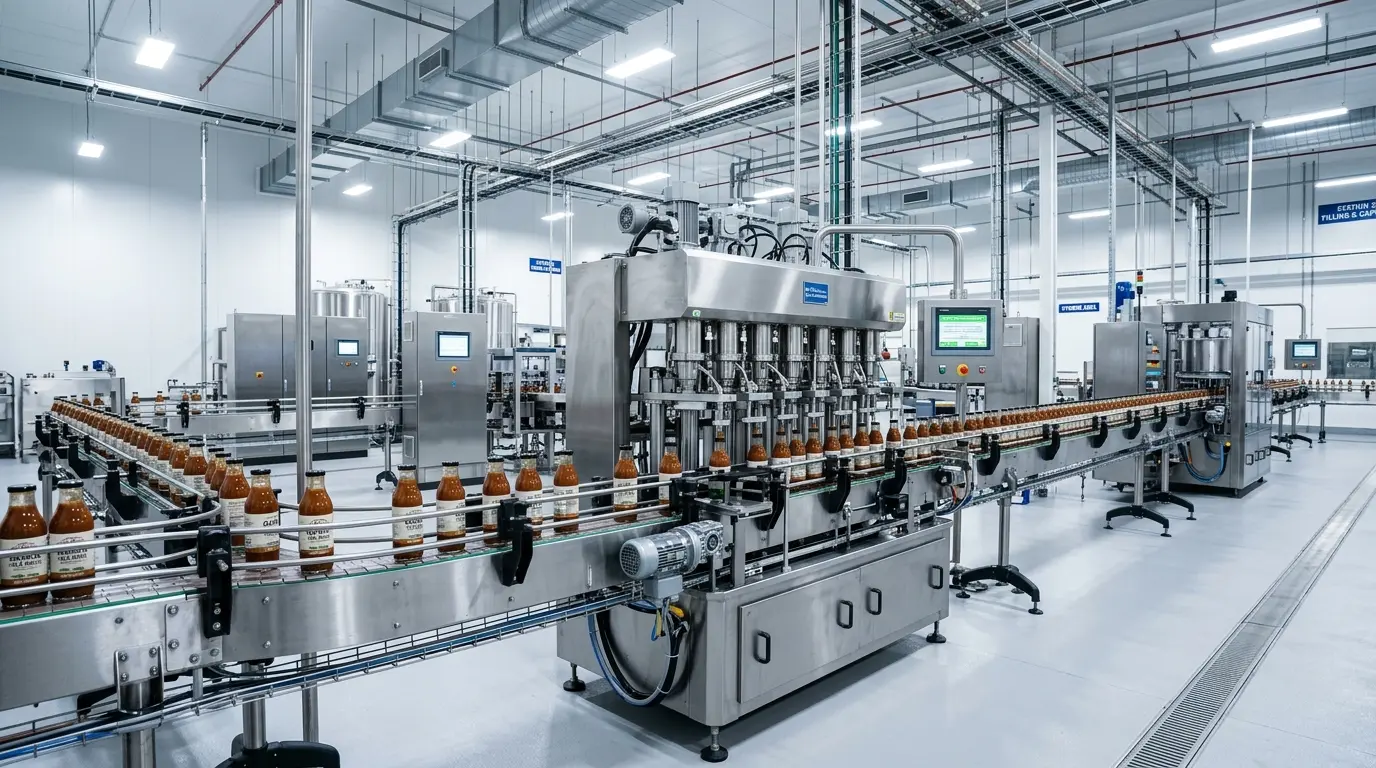
Automation that meets food industry standards
Food processing operations have control system requirements that go beyond standard industrial automation. Batch consistency, traceability, allergen management, and food safety compliance are built into the operational requirements from the start - and the control system has to support them, not just run the process.
A PLC that enforces batch recipes and records every parameter, a SCADA historian that captures the data your auditors need, an HMI that gives operators the information to catch a process deviation before it becomes a product quality issue - this is what automation engineering looks like in a food processing environment.
What we do in food processing
Our food processing work covers PLC programming for batch and continuous processes, SCADA and historian systems, HMI design, and control system upgrades on existing plant. We work on new automation projects where a manual process needs to be brought under automatic control, and on modifications to existing systems where the current setup does not meet current production, compliance, or traceability requirements.
Batch control programming is a significant part of our food processing work. We write batch sequences that handle the normal process, the exception conditions, and the transitions between states - ingredient addition, mixing, heating, cooling, transfer, and CIP cycles - in logic that your production team can follow and your electrical staff can maintain.
Recipe management systems allow authorised operators to create and modify recipes within defined parameters, select recipes for production runs, and produce batch reports that record every parameter for the completed batch. We design recipe systems that balance flexibility for your production team with the controls your food safety framework requires.
Traceability and data capture
Food traceability requirements are increasingly strict. Customers, retailers, and certification bodies expect manufacturers to be able to demonstrate, from a finished product batch, what raw materials were used, when and how they were processed, and what equipment was involved.
Manual recording systems are unreliable and create audit risk. Automated data capture - lot number scanning at intake, PLC-recorded batch parameters, historian data linked to batch records - produces traceability records that are complete, accurate, and available without the manual effort that alternative approaches require.
Washdown environments and hygienic installation
Food processing plants use high-pressure water and cleaning chemicals to maintain hygiene standards. Electrical and control equipment in these areas needs to be appropriate for the environment - correctly rated enclosures, cable entries that resist water ingress, and installation that does not create contamination points or trap cleaning residue.
We design and install electrical systems in food processing environments that meet the hygiene requirements of your facility and the certification standards that apply to your products.