Understanding what you have
Most industrial facilities accumulate changes over years of operation. Equipment gets replaced, systems get extended, modifications get made during shutdowns, and the documentation that should reflect all of this gradually falls behind. Over time, maintenance teams are working from memory and experience rather than accurate records, and the actual condition and compliance of the installed plant becomes unclear.
A site audit gives you an accurate picture of what is installed, what condition it is in, where the gaps are between the installed system and current standards, and what the priority order is for addressing them. That information is the starting point for sensible maintenance planning, capital budgeting, and risk management.
What we audit
Electrical switchgear and distribution - condition of installed switchgear, circuit breakers, busbars, and distribution panels. Age, maintenance history, fault capacity ratings against current fault levels, and end-of-life assessment. Identification of equipment that presents a reliability or safety risk.
Protection relay systems - review of installed protection relay settings against the current network configuration and fault levels. Protection coordination assessment. Identification of relays operating on incorrect settings or protecting equipment they were not originally configured for following system changes.
Earthing systems - review of earthing design and installed earthing against AS 2067 and site standard requirements. Particular attention to HV installations where inadequate earthing presents a safety risk.
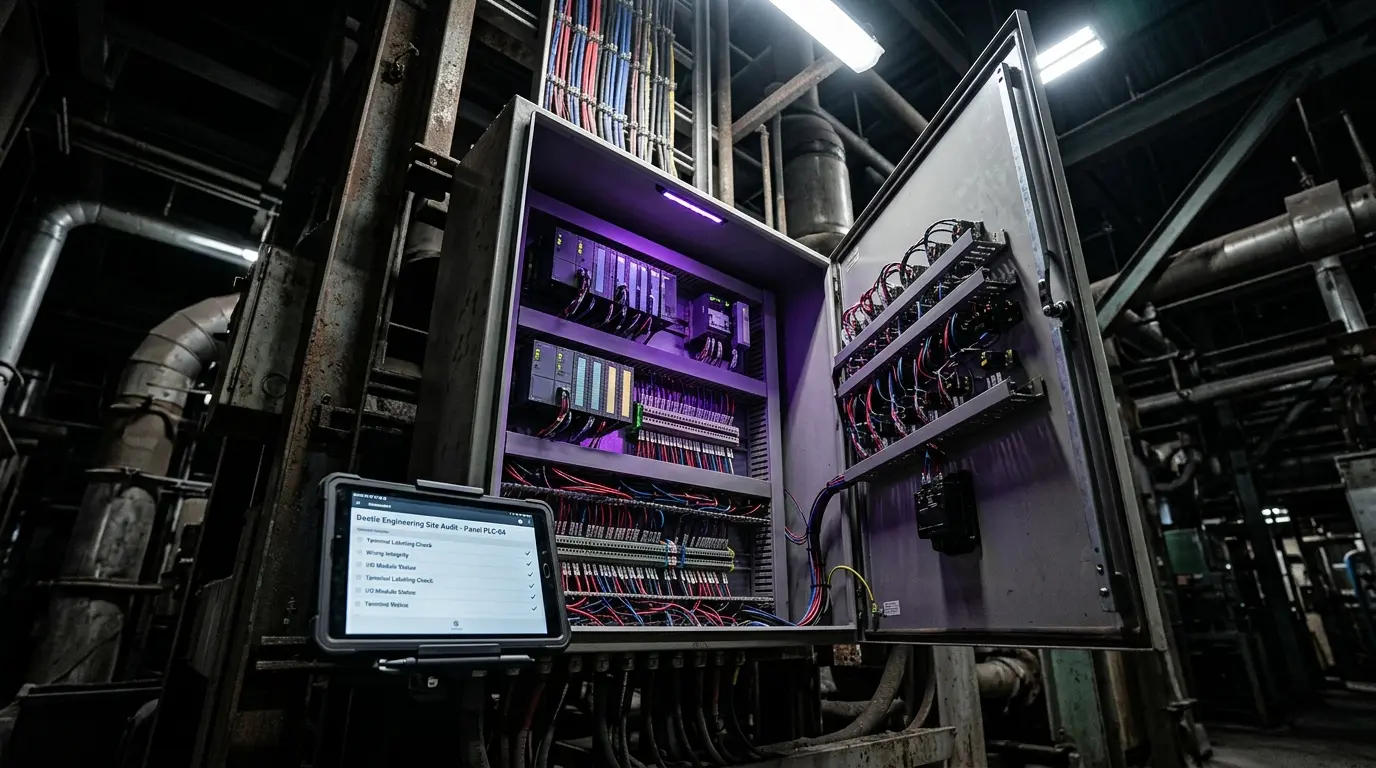
Control system hardware - PLC and I/O hardware condition, firmware currency, vendor support status, and spare parts availability. Identification of hardware approaching end-of-life or already out of vendor support - the systems that present the highest reliability risk.
Program and documentation audit - review of PLC programs against functional requirements and documentation standards. Identification of undocumented logic, hardcoded values that should be parameters, and known deficiencies. Drawing register review to assess documentation currency.
SCADA and historian health - SCADA server and workstation hardware condition, software version currency, historian database health, and alarm system performance. Alarm count analysis - a common indicator of a SCADA system that has grown without ongoing management.
OT network audit - network topology, switch configuration, segmentation, remote access points, and documentation. See our OT cybersecurity service for more detail on network-focused assessments.
How we report findings
Audit findings are categorised and prioritised so that decisions can be made from the report. We use a straightforward risk-based approach - what is the likelihood of a problem occurring and what is the consequence if it does. High-risk findings that need immediate attention are clearly separated from medium-term maintenance items and lower-priority observations.
Recommendations are practical and costed at a high level where possible - enough to support budget planning without requiring a full engineering study for every finding. Where a finding requires detailed investigation before a recommendation can be made, we say so rather than guessing.
RPEQ-backed findings
Where audit findings involve engineering judgements that need to be backed by a registered engineer - assessments of protection system adequacy, earthing system compliance, or equipment fitness for purpose - these are provided under RPEQ sign-off. This is relevant for audits that feed into regulatory submissions, insurance assessments, or asset transactions.