Engineering that fits the outage window
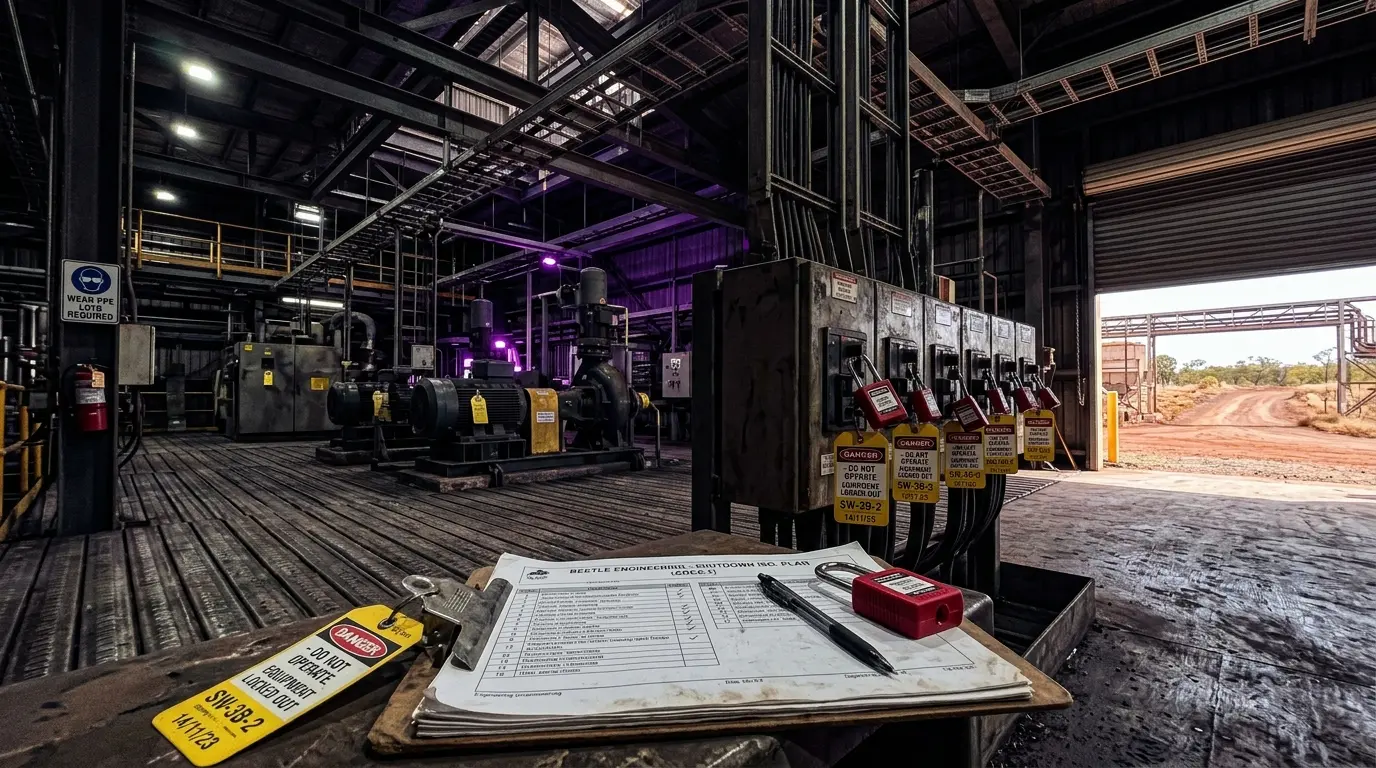
A planned shutdown is a fixed block of time with a defined cost. Every hour the plant is not producing is a direct hit to the bottom line. The engineering work that happens during that window needs to be scoped correctly, prepared thoroughly, and executed efficiently - because there is no flexibility in the schedule when a crusher or a mill is waiting to restart.
We approach shutdown work with that constraint at the front of our thinking. Scope is defined clearly before the shutdown starts. Preparation - program development, hardware staging, pre-procurement of materials - is done in advance so the outage window is used for work that can only happen when the plant is stopped. Progress is communicated clearly so the shutdown coordinator can manage the overall schedule.
What good shutdown preparation looks like
Most shutdown overruns are caused by inadequate preparation. Work that was not properly scoped, materials that were not ordered in time, program changes that were not developed and tested before the shutdown, or dependencies on other trades that were not identified until they became blockers.
We scope shutdown work in detail before the outage. For control system work this means the program changes are written and tested offline, the hardware is staged and bench-tested, and the cutover sequence is documented and agreed with operations before anyone enters the plant. When the shutdown window opens, we are executing a plan - not developing one.
What we do during shutdowns
Control system cutovers - replacing or upgrading PLCs, control panels, or SCADA systems within a planned outage. Hardware pre-staged, programs pre-tested, cutover sequence documented. The outage window is for connection, commissioning, and testing - not programming.
PLC and SCADA modifications - program changes that require the process to be stopped for safe implementation. New equipment integration, sequence changes, interlock additions, and HMI updates. Tested offline before the shutdown, implemented and verified during the outage.
Electrical switchgear and panel work - switchgear maintenance, protection relay testing and calibration, cable terminations, new circuit installation, and MCC modifications. Coordinated with the electrical contractor where construction work is involved.
Instrument replacement and calibration - replacing failed or end-of-life instruments, calibrating critical measurement points, and loop-checking newly installed field devices. Completed to a documented schedule so nothing is missed before restart.
New equipment integration - connecting newly installed equipment to the existing control system during the outage. I/O wiring, program additions, SCADA configuration, and commissioning to handover-ready condition before the plant restarts.
Fault investigation - investigating known problems that can only be accessed or tested safely when the plant is stopped. Carrying out testing or physical inspection that would not be possible on a running plant.
Return to service
The end of a shutdown is not the end of our involvement. We support the restart, monitor the control system during initial operation, and stay on site until the plant is running stably and operations are confident. Punch list items identified during commissioning are tracked and closed before we leave.
Documentation updated during the shutdown - loop check sheets, program revision records, as-built drawing updates - is issued as a shutdown completion package.