
Energy as an engineering problem
Industrial energy costs are engineering problems with engineering solutions. A pump running against a throttled discharge valve, a compressor loaded to maintain pressure in a system with significant leakage, a conveyor drive running at full speed when process requirements allow for less - these are control and electrical engineering issues. They are fixable.
The starting point is always measurement. Reducing energy consumption on a site that cannot measure where the energy goes is guesswork. We begin with metering and monitoring to establish an accurate picture of consumption by area, equipment, and operating mode. From that picture, the opportunities become quantifiable rather than speculative.
Where energy is typically wasted in industrial plants
Motors running unloaded - motors that remain energised during production pauses, equipment changeovers, or outside operating hours. The fix is usually a control logic change to shut down the motor when not required and sequence the restart correctly.
Fixed-speed drives on variable loads - pumps and fans running at full speed with flow controlled by throttling. Variable speed drives (VSDs) reduce motor power roughly with the cube of speed - reducing a pump to 80% speed uses around half the power. Where the process load varies, VSDs almost always pay back.
Compressed air systems - compressed air is one of the most energy-intensive utilities in industrial plants. Leakage in distribution systems, pressure set higher than process requirements, and equipment that draws compressed air outside production hours are common sources of waste. Air leak surveys, pressure optimisation, and compressor control improvements are frequently high-return opportunities.
Inefficient pump systems - pumps operating well away from their best efficiency point, parallel pump sets with poor load sharing, and recirculation flows maintained to keep pumps out of surge. Pump system assessments often identify significant opportunities for flow control redesign or equipment replacement.
Lighting and HVAC - switchroom, workshop and area lighting running continuously, air conditioning in areas that do not require precision temperature control. Lower-return opportunities individually, but straightforward to implement and often part of a broader energy improvement programme.
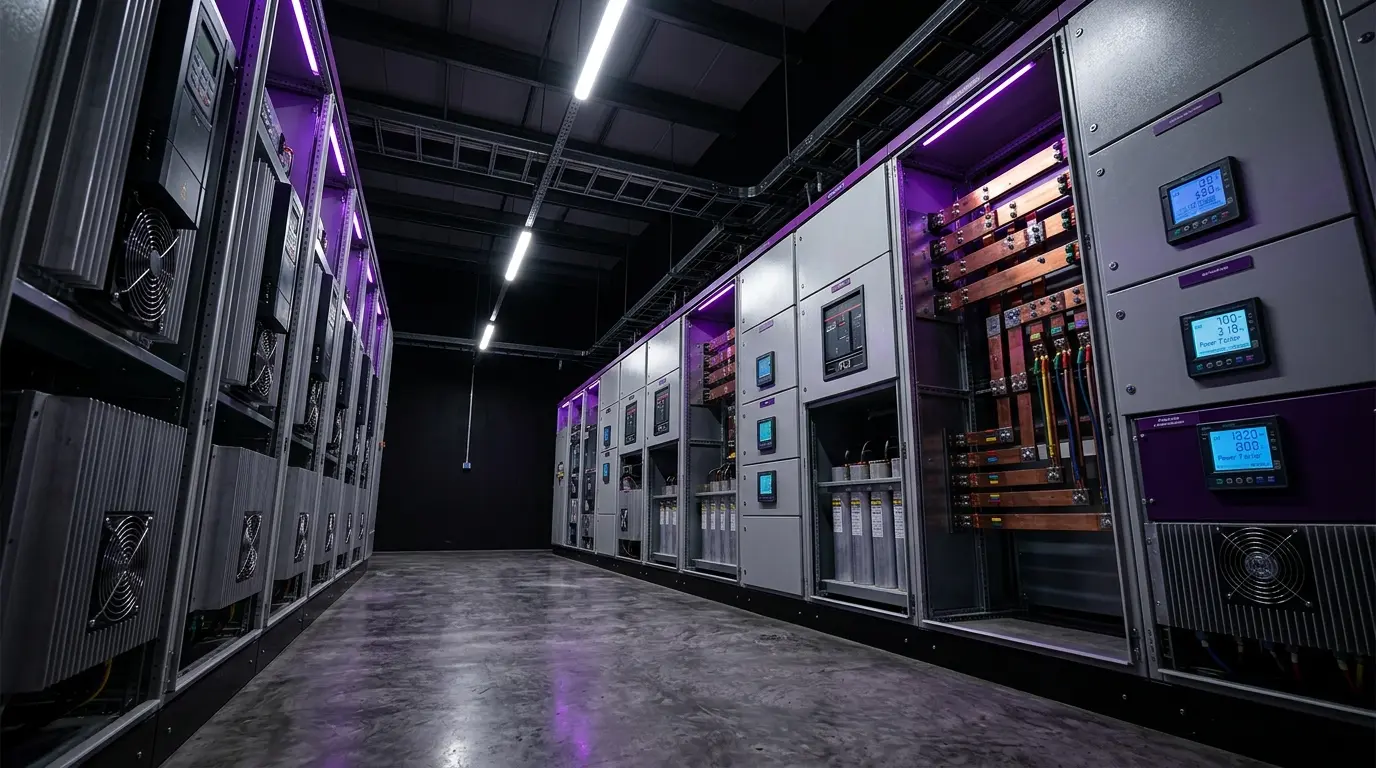
Poor power factor - reactive power demand increasing apparent current and driving up network tariff charges. Power factor correction reduces the kVA drawn from the network for the same kW of real load.
What we do
Energy monitoring - sub-metering installation at equipment and area level. Energy data collected via IoT or existing SCADA infrastructure. Dashboards showing consumption by area, load factor analysis, and baseline establishment for measuring improvement.
Energy audits - structured assessment of site energy consumption. Walking the plant, reviewing metering data, assessing major loads against process requirements, and identifying inefficiency. Output is a prioritised report with estimated savings and implementation costs for each opportunity.
VSD installation and commissioning - variable speed drive selection, electrical design, installation coordination, PLC integration, and commissioning. Including control logic changes to manage the drive correctly within the process sequence.
Control logic optimisation - modifying existing PLC programs to reduce unloaded running, optimise pump and compressor sequencing, and implement time-based or demand-based load control. Often the lowest-cost intervention with fastest payback.
Power factor correction - assessment of reactive demand and design of correction systems. Fixed or automatic correction banks, including harmonic filtering where drive loads create distortion.
Demand management - load scheduling and peak demand reduction strategies for sites on tariffs with demand charges. Coordinating large motor starts, sequencing high-demand operations, and setting demand targets in the control system.
Measuring the result
Every energy optimisation project establishes a baseline before implementation and measures performance after. Savings are verified against actual metering data, not modelled estimates. If a VSD installation is projected to save 150 MWh per year, we confirm it against metered consumption in the months following commissioning.
This matters for two reasons - it validates the investment decision and it provides the evidence needed for internal reporting or carbon accounting requirements.